In today’s digital landscape, searching for images goes far beyond entering a few keywords. The rise of artificial intelligence has revolutionized how we find, analyze, and interact with visual content. Whether you're a creative professional, a business owner, a developer, or just a curious user, the best AI for image search platforms provides accuracy, speed, and rich functionality. This guide explores the top five platforms that deliver outstanding AI-powered image search experiences.
1. Google Lens and Google Cloud Vision AI
Overview
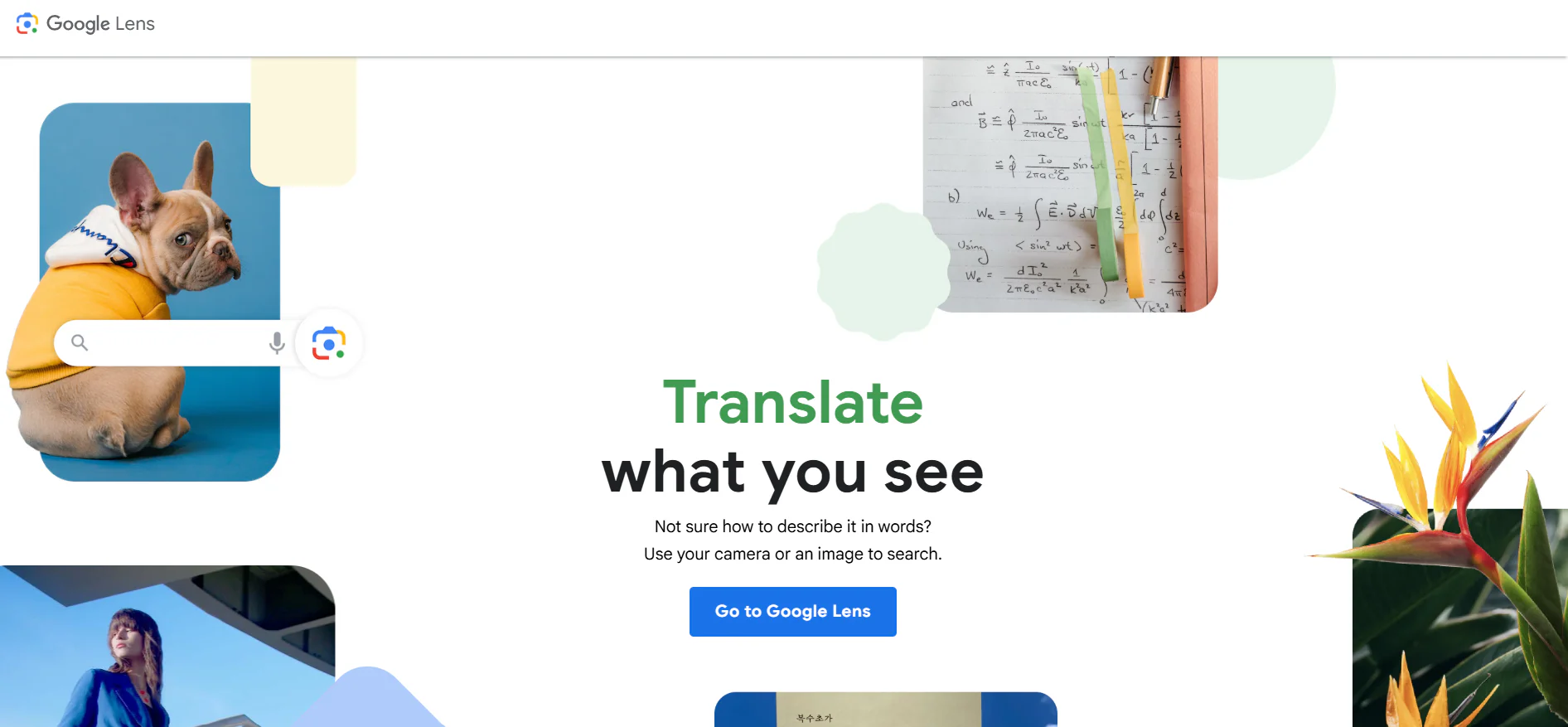
No discussion about the best AI for image search is complete without mentioning Google. Leveraging its massive dataset and sophisticated algorithms, Google offers two powerful solutions:
Google Lens – A consumer-facing app that allows users to search the world visually using their smartphone camera or existing images.
Google Cloud Vision AI – A cloud-based API designed for developers and enterprises, providing advanced image analysis and search capabilities via pre-trained and customizable models12.
Key Features
Visual Search: Instantly identifies objects, places, text, and products from images.
Real-time Analysis: Users can search using live camera input—a must-have for mobile productivity.
Optical Character Recognition (OCR): Extracts text from images and translates it, useful for documents, signs, and handwritten notes.
Integration: Syncs with Google Photos, Google Search, and other Google services for seamless workflow.
Powerful APIs: Developers can access features like image labeling, face/landmark detection, web detection (finding similar or related images), and content moderation.
Use Cases
Shopping by taking photos of products
Translating menu items or signs while traveling
Automatically tagging and organizing large photo collections
Content moderation and copyright enforcement
Notable Advantages
Free and readily available on Android and iOS (Lens)
Deep learning models trained on billions of images
Robust developer support and documentation for business integration
2. Amazon Rekognition
Review
Amazon Rekognition is a leader in enterprise-grade visual analysis. Hosted on AWS, it is widely adopted in industries for content moderation, facial recognition, and advanced image classification. If you're looking for the best AI for image search in large-scale applications, Rekognition should be top of mind.
Key Features
Face Detection and Analysis: Locates faces, estimates attributes (e.g., emotions, age range), and compares faces with stored profiles.
Object and Scene Detection: Recognizes thousands of objects, scenes, and activities.
Text Detection: Easily extracts text, including from complex backgrounds.
Content Moderation: Identifies inappropriate or sensitive images for media, e-commerce, and educational platforms.
Custom Models: Train your classifiers with AutoML.
Use Cases
Social media safety and content verification
Automating photo cataloging for e-commerce
Security and identity verification
Customizable detection for industrial and healthcare sectors
Lenso.ai has emerged as a dedicated, user-friendly platform focused on reverse image search, helping users trace sources, detect duplicates, and identify faces and places. Its AI performs exceptionally well in copyright protection, fraud detection, and visual research, making it a favorite among photographers, journalists, and content creators.
Key Features
Reverse Image Search: Upload or drag an image to find where it appears online or discover similar visuals.
Face, Place, and Object Recognition: Detects people, landmarks, logos, and other identifying features in one simple search.
Duplicate & Related Image Discovery: Quickly uncovers duplicates across the web—perfect for copyright compliance.
Custom Alerts: Notifies you when your images are found in new locations.
Advanced Filtering: Refines search results by category, relevance, or source.
Use Cases
Copyright enforcement for photographers and creators
Diligence and research for journalists
Detecting image misuse or misinformation
Visual brand monitoring
Notable Advantages
Intuitive web interface with fast, accurate results
Specializes in face, place, and landmark matching
Free trial and paid professional plans available
4. Copyseeker
Overview
Copyseeker is a standout platform for advanced reverse image search and source tracing. Powered by state-of-the-art algorithms, it goes beyond simple matching by understanding complex visual patterns and metadata, making it the best AI for image search for professionals needing pixel-perfect precision8.
Key Features
Precision Matching: AI understands not just shapes but textures and even subtle image edits.
Privacy Focus: Claims robust privacy practices and does not track or store user images.
Metadata and Contextual Analysis: Analyzes embedded data to strengthen accuracy.
Duplicate Detection: Easily finds clones, altered images, or unauthorized uses.
Use Cases
Verifying the originality of images in business contexts
Fact-checking and myth-busting for journalists
Content protection and legal dispute support
Notable Advantages
User-friendly drag-and-drop search for instant results
Frequent updates for evolving digital landscapes
Free access tier for casual users
5. Microsoft Azure AI Vision
Overview
Microsoft's Azure AI Vision is a cloud-based suite of tools for image analysis, recognition, and search, designed for enterprise and professional developers. It harnesses deep learning to deliver strong performance on visual inspection, especially for brands, objects, text, and facial features.
Key Features
Image Classification and Tagging: Labels thousands of objects and scenes.
Face, Brand, and Landmark Recognition: Identifies people, organizations, and physical locations.
Optical Character Recognition: Extracts text, even from handwritten notes or low-resolution scans.
Background Removal: Offers automated background extraction, beneficial for e-commerce and marketing.
Custom Model Training: Supports sophisticated custom models using Azure’s machine learning framework.
Use Cases
Automating content tagging for media libraries
Visual product search in retail apps
Advanced photo analysis in security systems
Integration into larger AI and data workflows
Notable Advantages
Extensive enterprise integration with Microsoft’s cloud ecosystem
High scalability and uptime
Strong support for multiple languages and accessibility
Platform Comparison Table
Platform
Strengths
Typical Use Case
Developer Access
Unique Feature(s)
Google Lens/Cloud Vision
Massive dataset, accuracy, real-time
Consumer & developer, global use
Yes
Live camera search, robust API
Amazon Rekognition
Enterprise scale, customization, speed
Enterprise, security, social media
Yes
Deep AWS integration
Lenso.ai
Specialized reverse search, user focus
Creative, copyright, journalism
Limited
Face/place alerts, duplicate scan
Copyseeker
Pixel-perfect detection, privacy
Fact-checking, originality checks
No
Metadata/contextual analysis
Microsoft Azure AI Vision
Enterprise developer, flexibility
Enterprise SaaS, workflow apps
Yes
Background removal, Azure access
What Makes the Best AI for Image Search?
Selecting the best AI for image search is about more than finding similar images. The most advanced platforms stand out by offering:
Deep Learning Accuracy: Beyond color or pattern matching, they interpret content, context, and meaning.
Speed & Scalability: Whether it’s millions of images or a real-time photo snap, results must arrive quickly.
Security & Privacy: Especially critical for journalists, brands, and organizations working with sensitive data.
Integrations: APIs and SDKs expand the platform across apps, services, and devices.
Customizability: Ability to fine-tune models for domain-specific tasks, from medical imagery to e-commerce.
Rich Feature Set: OCR, facial and landmark recognition, duplicate detection, and background removal allow broader utility.
Real-World Applications
Platforms offering the best AI for image search empower a wide range of user needs:
Journalism and Fact-Checking: Verify origins of viral images, detect doctored media, and track photo distribution.
Brand Management: Monitor misuse or unauthorized distribution of visual assets.
Education and Accessibility: Discover educational visuals, enhance alt-text generation, and enable broader content reach.
Security & Surveillance: Identify faces, unsafe content, or anomalous patterns at speed and scale.
The Future of AI Image Search
AI-driven image search is only getting smarter. Advances in generative AI, neural networks, and data integration promise even broader capabilities, such as searching inside videos, cross-referencing images against text, and understanding image context with near-human accuracy. Businesses and users who embrace these platforms now will continue to benefit from the leader’s edge in productivity, compliance, and creative flow.
Frequently Asked Questions
What is the best AI for image search in 2025?
The best AI for image search platforms in 2025 include Google Lens, Amazon Rekognition, Lenso.ai, Copyseeker, and Microsoft Azure AI Vision123.
How do I choose the right platform?
For consumers: Start with Google Lens.
For enterprises: Consider Amazon Rekognition or Azure AI Vision.
For creatives and copyright/fact-checking, Lenso.ai and Copyseeker offer focused functionality.
Are these tools free?
Many offer free tiers or trials, but advanced features, large-scale integrations, or enterprise usage typically require a paid subscription or API plan.
Can these tools detect fake or manipulated images?
Most leading platforms, especially those focused on reverse image search, can spot duplicates, altered, or misused images, protecting against misinformation and copyright infringement.
By harnessing the best AI for image search, users and organizations unlock smarter discovery, stronger protection, and greater creativity in the age of visual abundance. The next time you need to find, verify, or manage an image, these five platforms will ensure results that are fast, accurate, and future-proof.