Artificial intelligence has rapidly evolved from a futuristic concept to a core business tool that companies are adopting across industries. In particular, ChatGPT 5 for personal assistants is gaining traction as a powerful way to streamline workflows, enhance productivity, and personalize customer experiences. Businesses today are no longer just considering chatbots for FAQ responses; they are exploring intelligent, context-aware AI systems that can serve as personal assistants for employees, teams, and clients.
ChatGPT 5, the newest advancement in OpenAI’s language model series, stands at the forefront of this shift. It is more nuanced, contextually aware, and responsive than its predecessors, making it the ideal foundation for AI-powered personal assistants that can be tailored to a business’s specific needs.
In this article, we’ll break down how companies can leverage ChatGPT 5 for personal assistants, explore its key advantages, provide use cases across different industries, and highlight best practices for implementation.
Why ChatGPT 5 Is a Game-Changer for Personal Assistants
Unlike traditional digital assistants that rely on rigid programming, ChatGPT 5 operates with advanced natural language processing (NLP) capabilities. It not only understands queries but also interprets context, tone, and intent. This means it can provide answers that feel human-like, contextually correct, and more helpful in day-to-day operations.
Here are a few standout improvements that make ChatGPT 5 invaluable for personal assistants:
Better Context Retention – ChatGPT 5 can remember longer conversations, allowing it to provide continuity in workflows. This makes personal assistants powered by it capable of handling multi-step requests without losing context.
Customization – Businesses can tailor their AI personal assistants to align with company-specific terminology, workflows, and brand voice. ChatGPT 5’s adaptability ensures it fits seamlessly into unique business environments.
Multi-Modal Capabilities – Many businesses integrate ChatGPT 5 with voice recognition, document processing, and even image analysis, making personal assistants more versatile than simple text-based helpers.
Higher Accuracy & Reliability – With advanced reasoning capabilities, ChatGPT 5 reduces the risk of errors, provides stronger fact-checking, and assists with decision-making across industries.
Task Automation – Beyond answering questions, ChatGPT 5 for personal assistants can automate scheduling, draft communications, summarize reports, and even handle customer service interactions without human intervention.
These advancements set the stage for practical business use cases.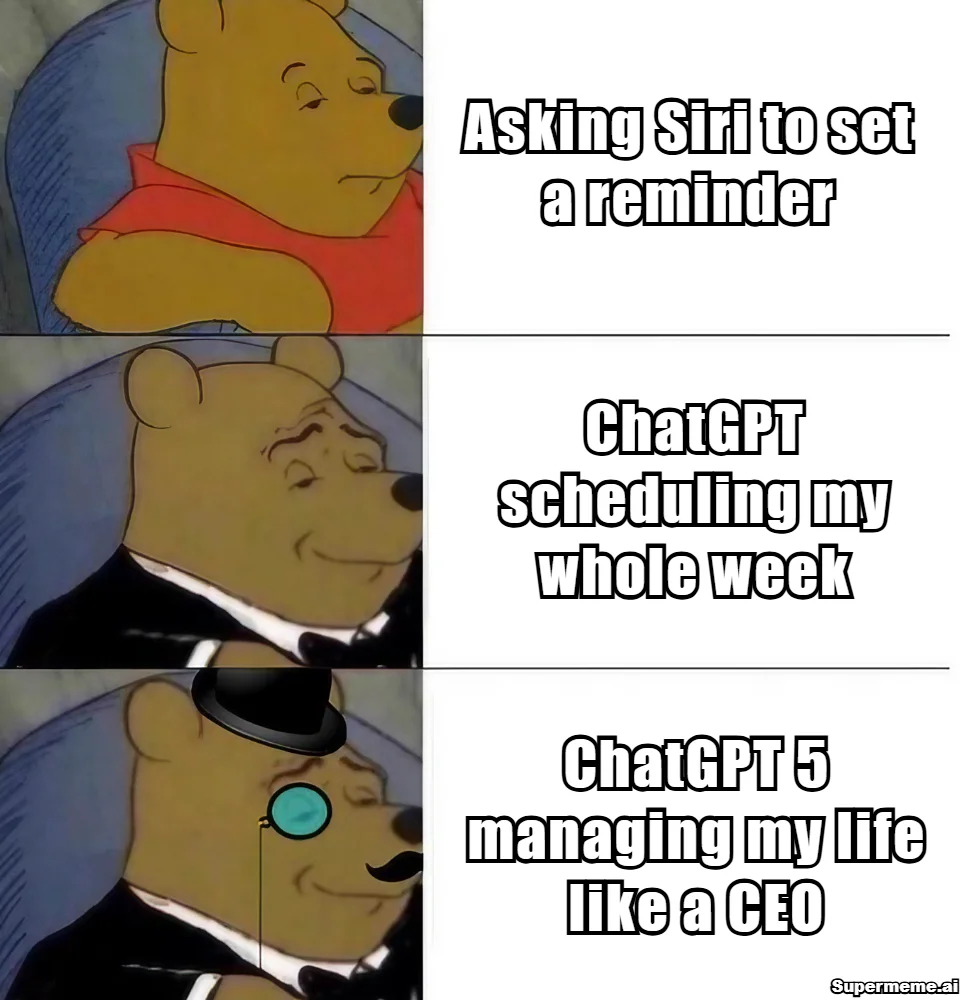
Business Benefits of ChatGPT 5 for Personal Assistants
Implementing ChatGPT 5 for personal assistants offers businesses a range of operational and strategic benefits. Here are the top advantages:
1. Enhanced Productivity
Personal assistants powered by ChatGPT 5 reduce manual workload by handling administrative tasks—such as meeting scheduling, inbox management, and document drafting—allowing employees to focus on higher-value activities.
2. 24/7 Availability
Unlike human staff, AI assistants operate around the clock. This provides businesses with a reliable, always-on assistant that guarantees continuity across different time zones.
3. Improved Customer Experience
ChatGPT 5 can serve as a customer-facing personal assistant that answers questions, provides product recommendations, and guides users through complex processes—all while delivering natural, conversational interactions.
4. Cost Efficiency
Hiring additional human staff for repetitive administrative roles can be costly. Deploying ChatGPT 5 for personal assistants allows companies to scale without significantly increasing labor expenses.
5. Data-Driven Insights
By managing conversations and workflows, ChatGPT 5 collects valuable data about employee productivity and customer behavior. Businesses can analyze this data to optimize processes and uncover new opportunities.
Use Cases Across Industries
The versatility of ChatGPT 5 makes it applicable across many industries. Here’s how different sectors can leverage ChatGPT 5 for personal assistants:
1. Corporate Offices & Enterprises
Automating meeting scheduling and reminders.
Drafting professional emails, reports, and presentations.
Assisting HR with onboarding FAQs for new employees.
Managing internal communications in large organizations.
2. Customer Service & Retail
Offering a virtual shopping assistant that recommends products.
Providing personalized responses to customer questions.
Handling order tracking and post-purchase support.
Assisting with returns and complaint resolution.
3. Healthcare
Helping patients schedule medical appointments.
Managing reminders for prescriptions and follow-ups.
Assisting doctors with summarizing patient records.
Offering real-time symptom checking and triaging.
4. Education
Supporting students with assignments, research, and learning schedules.
Assisting teachers with lesson planning and grading summaries.
Acting as a campus information assistant for administrative queries.
5. Finance & Banking
Offering real-time balance inquiries and transaction reminders.
Guiding budgeting and investments.
Assisting bank staff in drafting policy explanations for clients.
Detecting potential fraud through conversational analysis.
6. Travel & Hospitality
Acting as a virtual concierge for hotel guests.
Helping clients plan trips, book flights, and manage itineraries.
Providing multilingual customer service for global travelers.
Each industry benefits from improved efficiency, personalization, and customer engagement.
How Businesses Can Implement ChatGPT 5 for Personal Assistants
While the potential is clear, deploying ChatGPT 5 effectively requires a structured implementation strategy. Here’s how businesses can maximize success:
1. Define Clear Objectives
Identify what outcomes you want from the AI assistant. Is it for internal use (employee productivity) or external use (customer support)? Defining the purpose ensures customization aligns with business needs.
2. Choose the Right Integration Method
ChatGPT 5 can be integrated into existing platforms:
Slack or Microsoft Teams for workplace tasks.
Websites and mobile apps for customer-facing use.
CRM systems for sales and support functions.
3. Tailor the Assistant
Train ChatGPT-5 with company-specific data so the assistant understands brand tone, policies, and workflows. This approach helps teams build prompt libraries, FAQs, and proprietary knowledge bases that support consistent personalization for everyday ChatGPT users.
4. Ensure Data Security & Compliance
With sensitive information at stake, data protection is critical. Companies must ensure encryption, access controls, and compliance with regulations such as GDPR or HIPAA (in healthcare).
5. Monitor & Iterate
Like any AI solution, ChatGPT 5 personal assistants improve with feedback. Businesses should actively monitor performance, review logs, and update training data to refine responses and accuracy over time.
Challenges and Considerations
While ChatGPT 5 is powerful, businesses should be aware of certain challenges when deploying personal assistants:
Over-Automation Risk – Relying too much on AI may remove the human touch where empathy is required (such as customer complaints).
Bias & Misinformation – If not trained correctly, AI systems might provide incorrect or biased answers.
Adoption Resistance – Some employees may hesitate to embrace AI, requiring proper training and change management.
Privacy Concerns – Businesses handling sensitive customer or employee data must rigorously uphold security standards.
Proactively addressing these concerns ensures smoother adoption and better long-term results.
Future of Personal Assistants with ChatGPT 5
The role of ChatGPT 5 for personal assistants is expected to expand significantly in the coming years. As AI becomes more multimodal, these assistants won’t just handle text—they’ll process emails, analyze charts, recognize images, and even respond to voice or video inputs. This will make them integral to daily workflows, much like email or search engines today.
Moreover, as companies prioritize hybrid and remote work models, AI-driven personal assistants will bridge the gap between distributed teams by managing schedules, facilitating collaboration, and ensuring smooth communication across time zones.
We can also expect them to become more proactive than reactive. Instead of just responding to employee requests, AI assistants will begin anticipating needs—reminding managers about upcoming performance reviews, suggesting follow-ups for clients, or flagging areas in reports that require attention.
Best Practices to Maximize ROI
To ensure that businesses see the highest return on investment when using ChatGPT 5 for personal assistants, here are some practical tips:
Start Small and Scale Gradually – Launch AI assistants with limited tasks (like scheduling) and scale to complex workflows as reliability improves.
Combine with Human Oversight – Use human review for sensitive decisions to balance automation and empathy.
Consistently Train the Model – Feed the assistant updated company materials, FAQs, and training data to maintain accuracy.
Encourage Employee Adoption – Provide training sessions so staff understand how to get the best from AI.
Measure KPIs – Track time savings, cost reduction, and satisfaction scores to quantify results.
Conclusion
The emergence of ChatGPT 5 for personal assistants isn’t just a technological advancement—it’s a business transformation. By automating routine tasks, offering personalized support, and enhancing decision-making, these AI-powered assistants enable companies to boost productivity, reduce costs, and improve both employee and customer experiences.
As AI continues to evolve, the organizations that integrate ChatGPT 5 into their workflows today will be ahead of the curve tomorrow. While challenges like privacy and adoption remain, the potential to revolutionize business communication and operations is undeniable.
For companies seeking better efficiency and more meaningful engagement, now is the time to invest in ChatGPT 5 for personal assistants—a move that promises long-term value across industries.