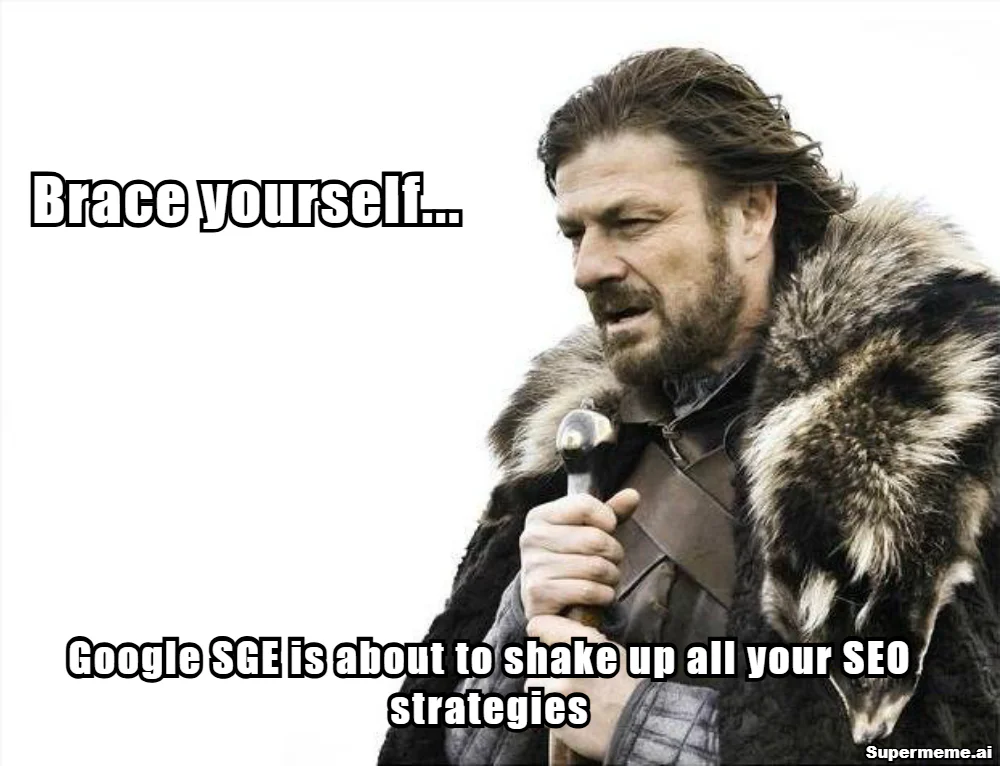
The evolution of search has always been punctuated by major algorithm updates, but few changes have made as significant a leap as Google’s Search Generative Experience (SGE). As we step into 2025, SGE is fundamentally remaking how internet users search, how search results are structured and displayed, and how SEO professionals and businesses must adapt their strategies. In this comprehensive analysis, we’ll explore the far-reaching effects of SGE, reveal data-backed trends, and share actionable strategies for navigating this transformative development.
What Is Google SGE?
Google’s Search Generative Experience is an AI-powered system integrated directly into the search engine results page (SERP). Rather than simply listing the familiar “10 blue links,” SGE creates a detailed, AI-generated answer summary at the top of the SERP, often drawing from multiple authoritative sources. This summary is designed to directly address complex queries in a conversational, context-aware manner, reducing users’ need to visit multiple sites for answers.
Key Features of SGE
AI-Generated Summaries: SGE provides text-rich overviews that synthesize answers from various sources in response to nuanced or multipart queries.
Conversational Search: Users can interact with follow-up questions, and the AI adjusts contextually.
Personalization: Results can be affected by user intent, history, and preferences, offering a more custom-fit experience.
Expanded Result Options: SGE isn’t just drawing from the top-ten organic results—many sources previously unseen in high SERP positions are featured.
The New Search Landscape: Changes in SEO Fundamentals
1. From Keywords to Intent
Traditionally, SEO revolved around identifying relevant keywords and optimizing website content accordingly. This foundational approach is still often managed or refined by the best SEO reseller to ensure keyword strategies align with evolving search behavior.
With the arrival of SGE, Google has shifted from a purely keyword-centric approach to emphasizing intent and context. SEO now requires:
Deep alignment with searcher intent rather than just including keywords.
Content that answers real user questions, not just matches search phrases.
Integrating semantic search and natural language processing in content strategies.
2. Zero-Click Search and Falling Organic Traffic
A critical outcome of SGE is the rise of zero-click searches23. As more queries are answered directly on the SERP, users are less likely to click through to external websites. Some studies have found that more than 50% of searches now end without a single click, a figure projected to continue rising as SGE adoption grows.
Measured Impact:
Organic traffic losses: Multiple independent analyses estimate site traffic losses ranging from 15% to over 60%, depending on the vertical and the prominence of SGE boxes for high-traffic queries.
For some sites ranking #1, the organic listing may be pushed down the page by as much as 1,200 pixels when the SGE box is expanded, greatly reducing visibility.
3. Rethinking SERP Rankings and Visibility
SGE is not simply a visual overlay above traditional results. Studies reveal that only a fraction of URLs shown in SGE match traditional page-one organic results, as little as 4.5% in one analysis6. Moreover, roughly 62% of links in SGE summaries come from domains outside the typical top 10 of organic listings.
What This Means:
Newly authoritative or niche-specific content can be surfaced by SGE, even if it’s not featured on the first SERP organically.
Focusing solely on ranking in the top 3–5 is no longer a guarantee for maximum visibility.
Achieving a ‘position zero’—inclusion in SGE AI summaries—could supersede the traditional #1 organic listing.
The Strategic Shift: Adapting SEO to SGE
SEO professionals must adapt rapidly to this new paradigm. The following strategies are now essential for success.
Focus on E-E-A-T
SGE amplifies Google’s focus on Experience, Expertise, Authoritativeness, and Trustworthiness (E-E-A-T). AI draws from sources it deems authoritative. This means:
Investing in deep-dive, expertly researched content.
Highlighting author credentials and expertise.
Earning credible backlinks, mentions, and positive user engagement signals.
Optimize for Enhanced, Structured Data
With SGE, structured data and schema markup have become more crucial than ever. Marking up web pages with rich, contextual metadata helps search engines understand (and surface) your content as part of these AI-driven summaries:
Implement FAQ schema, HowTo schema, and Article schema.
Use clear headings, bullet points, and concise answers to address potential SGE queries.
Content Format Optimization
SGE rewards comprehensive, well-structured content that responds to user intent:
Long-Form & In-Depth: Thin content is less likely to appear in SGE AI snapshots. Prioritize robust, thoroughly researched articles.
Multimedia Integration: Mix video, images, and interactive tools, as SGE is being built to present varied content types.
Conversational & Natural Language: Write content that reads like an answer to a real question, rather than keyword stuffing.
User Experience and Engagement
User experience metrics now play a larger role in determining which content SGE surfaces:
Improve site speed, accessibility, and mobile optimization.
Increase page engagement: dwell time, bounce rate, and repeat visits all feed into positive engagement signals.
Case Studies & Data-Driven Observations
Vertical-Specific Impact
SGE’s effect isn’t evenly distributed across industries. E-commerce, electronics, and fashion sectors have seen the greatest disruption in rankings and traffic, as SGE can more effectively aggregate and summarize product/brand information.
Traffic Recovery and Adaptation
SEO agencies experimenting with SGE optimization have found mitigation strategies:
Recovery techniques focusing on ranking in SGE summary carousels led to partial or full recovery in traffic for several tested domains.
Diversifying content to include less competitive, long-tail queries and expert Q&A formats helps regain lost visibility.
Frequently Cited Statistics
SGE appears in about 86.8% of all desktop search queries analyzed.
Only 4.5% of URLs in SGE summaries match those organically ranking on page one.
Traffic can drop by up to 60% for top-ranked conventional results in SGE-dominated queries.
Over 93% of SGE-cited links are not from the pre-existing top 10 organic results.

Opportunities: Not Just Challenges
Despite initial traffic anxieties, Google SGE offers several opportunities:
Greater Personalization: SGE can favor niche brands or expert content that better matches user context, not just site authority.
Enhanced Brand Building: Brands delivering value in answers—appearing in SGE—can boost trust and top-of-mind awareness, even if clicks fall.
Engagement with New Search Behaviors: Marketers can adapt to “conversational SEO”—optimizing for follow-up questions, related topics, and user journeys.
Common Pitfalls and Precautions
While adapting for SGE, it’s imperative to avoid certain missteps:
Over-Personalization: Customizing content too much per user may appear manipulative and compromise privacy.
Neglecting usability: Prioritizing AI-driven answers cannot come at the expense of clear navigation and accessibility.
Opaque algorithms: Ensure transparency in how personal data is used and provide users with clear opt-out options.
Forward-Looking SEO: Preparing for Tomorrow
Embrace Continual Experimentation
SGE is still rolling out and evolving rapidly. Early adopters engaging with Google Search Labs are best equipped to spot new patterns and tactics.
Rethink Key Performance Indicators
With click volumes often declining, savvy SEO teams measure success using broader metrics, such as:
Mention share in SGE summaries.
Brand visibility on the SERP, not just organic clicks.
Engagement metrics: dwell time, content shares, and qualitative feedback.
Diversify Web Presence
With SGE and similar systems in Bing, ChatGPT, and Perplexity expanding, relying on Google for the bulk of traffic is increasingly risky. Brands should:
Invest in content for emerging platforms.
Build community and direct engagement via newsletters, social, and mobile apps.

Conclusion
The Google SGE impact on SEO is profound and multi-faceted. As SGE becomes more central to search, organic traffic strategies rooted in keyword optimization must evolve toward a holistic, user-first approach emphasizing value, expertise, and intent. Businesses and SEOs must relentlessly adapt—optimizing for content quality, structured data, and user engagement—if they are to secure visibility in this brave new world.
As with every major search revolution, those who view SGE as an opportunity and not just a challenge will be best positioned for future success.