The rise of Supply Chain Software as a Service (SaaS) solutions marks a transformative chapter in how businesses manage and optimize their supply chains globally. In a landscape increasingly driven by complexity, the cloud-based supply chain software sector has attracted significant investor attention, fueling innovation and scaling capabilities at an unprecedented pace. This article explores the evolution of the Supply Chain SaaS industry, examines why it has become a hotbed for venture capital, and highlights key recent funding deals signaling future trends investors and industry players should watch closely.
The Evolution and Importance of Supply Chain SaaS
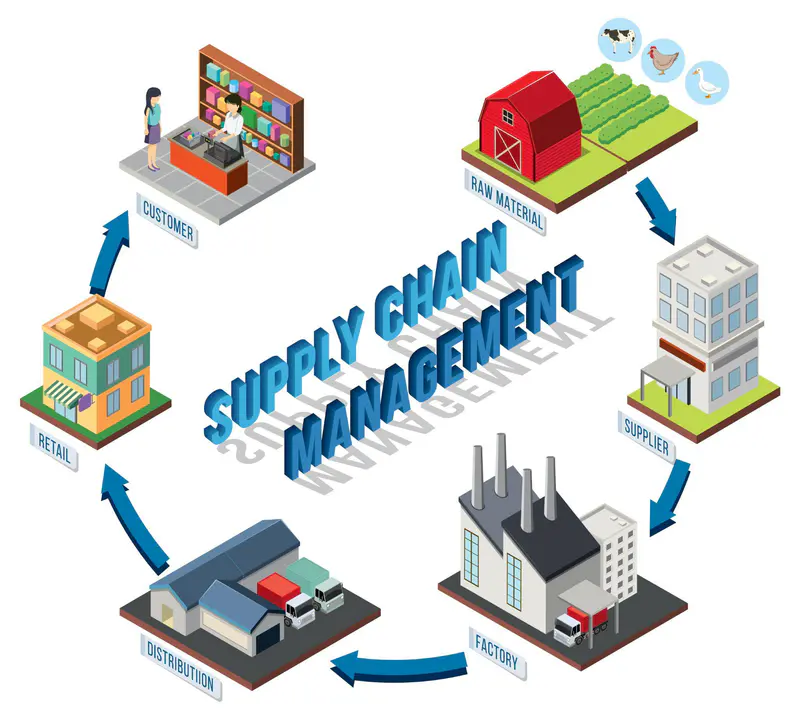
Supply chains form the backbone of commerce—they connect producers, manufacturers, distributors, and retailers, enabling goods to move from raw materials to finished products efficiently. However, supply chains are fraught with challenges, from unpredictability in demand and supply disruptions to rising operational costs and increasing consumer expectations for speed and transparency.
Traditional supply chain management tools often lacked agility and real-time capabilities, creating gaps in visibility and coordination. The advent of SaaS models—which deliver software applications over the internet on a subscription basis—offered the supply chain sector a crucial leap forward. These solutions are typically scalable, cost-effective, and require minimal upfront infrastructure investment compared to legacy on-premises systems.
Supply Chain SaaS platforms integrate AI, predictive analytics, Internet of Things (IoT) connectivity, and automation to provide dynamic inventory management, demand forecasting, logistics optimization, supplier collaboration, and risk management. The flexibility of SaaS allows businesses of all sizes to deploy sophisticated tools that improve decision-making, reduce waste, and enhance responsiveness.
Why Investors Are Pouring Capital Into Supply Chain SaaS
Several macro and micro factors underpin the surge in investor interest in Supply Chain SaaS startups:
- Globalization and Complexity: Supply chains have grown more global and interconnected, creating a demand for software solutions capable of handling complexity.
- Digital Transformation Push: Companies accelerated digitization efforts during the COVID-19 pandemic, exposing gaps in supply chain resilience and technology adoption.
- Recurring Revenue Model: SaaS’s subscription-based model offers predictable, recurring revenues with high margins, attractive to venture capital.
- Data-Driven Insights Demand: Enterprises seek to harness data for innovation, and Supply Chain SaaS platforms provide robust analytics capabilities.
- Sustainability and Compliance: Growing regulatory scrutiny and corporate responsibility focus add the need for solutions that monitor environmental and social governance factors.
Collectively, these drivers create a robust market opportunity projected to grow at a compounded annual growth rate (CAGR) exceeding 15% in the coming years. The industry is ripe for innovative companies to capture market share through differentiated, technology-forward supply chain solutions.
Key Recent Funding Deals to Watch
Tracking recent rounds of funding gives insight into which players are gaining traction and where the industry is headed. Here are some of the most significant deals from the last few years that underscore the rising momentum:
1. Flexport — Series E, $935 Million (2023)
Flexport, a pioneer in digital freight forwarding and global supply chain orchestration, closed a $935 million Series E round valuing the company at nearly $9 billion. This funding aims to accelerate product innovation, expand their platform capabilities across air, ocean, and land freight, and deepen digitization of customs and compliance.
Flexport’s focus on end-to-end visibility and control of complex logistics buffers has won favor from high-profile backers like GV (Google Ventures) and First Round Capital. Their success highlights investor confidence in solutions that effectively orchestrate multiple supply chain tiers under a unified SaaS platform.
2. Project44 — Series E, $420 Million (2022)
Project44, specializing in real-time transportation visibility solutions, secured $420 million in Series E funding to expand its footprint in North America and Europe. Their SaaS platform integrates with carriers, shippers, and third-party logistics providers to deliver detailed shipment tracking, predictive ETAs, and exception management.
The investment round, led by Goldman Sachs Asset Management, reflects a surge in demand for transparency and resiliency in transportation networks. Project44’s model emphasizes the growing importance of real-time data and machine learning in modern supply chains.
3. Llamasoft (now Coupa) — Acquisition, $1.5 Billion (2020)
Though an acquisition, Coupa’s $1.5 billion purchase of supply chain analytics company Llamasoft signals the strategic importance of integrated SaaS capabilities combining procurement, spend management, and supply chain design.
The deal represents a convergence trend where companies seek end-to-end cloud platforms spanning multiple facets of supply chain and financial operations to drive better decision-making through unified data.
4. FourKites — Series E, $100 Million (2023)
FourKites, a leader in real-time supply chain visibility and predictive analytics, raised $100 million in funding to broaden their AI-powered platform across new verticals such as retail, food, and beverage.
With the majority of supply chain disruptions stemming from transportation and demand shocks, FourKites capitalizes on SaaS solutions that enable proactive adjustments and improve service levels for clients globally.
5. C3 AI — Multiple Rounds, Over $250 Million
C3 AI, a key player in enterprise AI software including supply chain optimization, has garnered multiple rounds exceeding $250 million. Their platform integrates AI technologies like machine learning and deep learning to forecast demand, optimize inventory, and detect anomalies faster.
Their funding rounds emphasize the AI underpinning required for SaaS platforms to move beyond automation toward autonomous decision-making in supply chains.
Emerging Trends Shaping Supply Chain SaaS Funding
The ongoing evolution of Supply Chain SaaS is shaped by these notable trends:
- Sustainability-Driven Solutions: Startups offering SaaS platforms for tracking carbon footprints, waste reduction, and ethical sourcing are attracting investor interest given environmental regulations and consumer values.
- Hyperlocal and Last-Mile Delivery SaaS: With e-commerce growth fueling demand for quick deliveries, SaaS solutions optimizing last-mile logistics are seeing strong funding activity.
- Supply Chain Risk and Resilience Software: Tools that monitor geopolitical risks, supplier stability, and market disruptions are becoming critical for companies to anticipate and mitigate potential disruptions.
- Integration of Blockchain: SaaS platforms incorporating blockchain for traceability and fraud prevention in supply chains are gaining traction.
- Expansion into SMB Markets: Many emerging SaaS startups focus on making supply chain management accessible for small and medium businesses, a vast untapped market.

What to Watch Next
As supply chain challenges persist—from geopolitical tensions to climate disruptions—investment in SaaS solutions providing agility and insight will only intensify. Some key developments to track include:
- New IPOs and unicorn births among Supply Chain SaaS startups, signaling maturation.
- Advances in AI-enabled predictive analytics and autonomous supply chain orchestration.
- Increased M&A activity as established enterprise software players expand via acquisitions.
- Regulatory shifts incentivizing greater supply chain transparency and compliance technology.
- Growing partnerships between logistics providers and SaaS platforms to embed digital supply chain tech more deeply into operational workflows.
Conclusion
The rise of Supply Chain SaaS is revolutionizing how businesses navigate an increasingly complex global landscape. Fueled by substantial venture capital funding and strong industry demand, innovative startups are redefining supply chain management with cloud-native, AI-powered solutions.
Monitoring recent funding deals offers a window into which companies are leading the charge and where the sector’s future growth and innovation will emerge. For investors, manufacturers, logistics professionals, and technology developers alike, the Supply Chain SaaS space represents a dynamic and fertile frontier ripe with opportunity for transformation and value creation.
Would you like me to provide a detailed analysis of specific startups or focus more on the technological innovations driving the Supply Chain SaaS market?